Somewhere in the Last Decade, Every Movie Started Ending With a Pop Song — and There's a Whole Industry Behind It
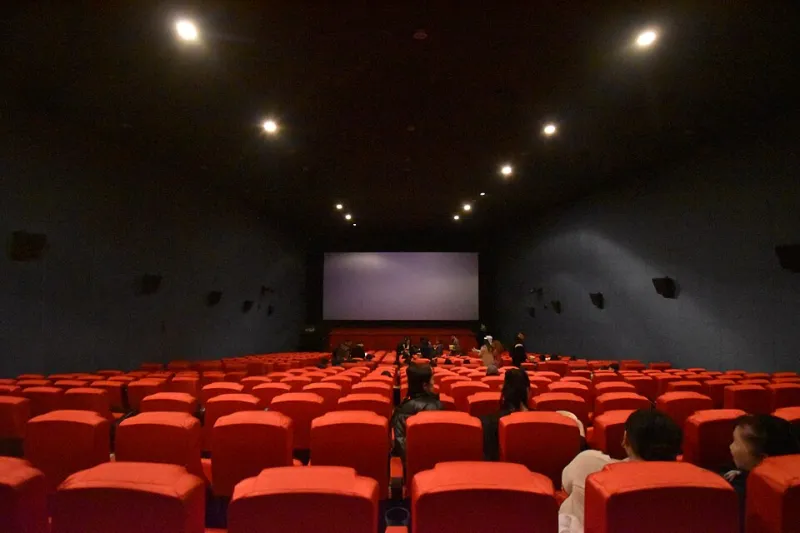
Photo: Fred Cherrygarden, CC BY-SA 4.0, via Wikimedia Commons
Think about the last five movies that actually stuck with you. Not the plot — the feeling. Chances are, at least three of them didn't fade out on swelling orchestral strings. They cut to black on a song. A real song. One you've had in your headphones since high school, suddenly recontextualized by whatever just happened on screen.
That's not a coincidence. That's a business model.
The Score Used to Own the Ending
For most of film history, the final scene belonged to the composer. John Williams, Hans Zimmer, Ennio Morricone — these were the people who told your heart what to feel when the credits rolled. An original score was the default, the prestige move, the thing that got nominated while everyone else went home.
Then streaming happened, budgets got weird, and someone in a marketing meeting realized something uncomfortable: nobody Shazams a violin section.
A licensed song comes with built-in recognition, a streaming footprint, and — increasingly important — a second life on social media. When a film ends on a recognizable track, the audience doesn't just remember the movie. They add the song to their playlist, make the edit, post the clip. The movie ends; the marketing doesn't.
Follow the Money (It's Not Where You Think)
Here's the part that surprises people: sync licensing — the business of placing songs in film, TV, and ads — has quietly become one of the most lucrative corners of the music industry. A major-label placement in a big studio release can run well into six figures, sometimes seven, depending on the track and the terms.
Music supervisors — the people whose job titles sound fake but absolutely are not — describe the process as a negotiation between three stubborn parties: the filmmaker with a vision, the label with a price, and the publisher with a veto. One supervisor I spoke with (who asked not to be named, because sync people protect their relationships like state secrets) put it plainly: "Everyone remembers the song that played. Nobody remembers that we fought for eight months to clear it."
And the math has shifted. An original score costs composer fees, orchestra sessions, mixing, and months of work. A needle drop costs a check and a signature — and delivers a chart bump, a viral moment, and a soundtrack album deal all at once. From a studio spreadsheet's perspective, it's not even close.
The Sync Agency Playbook
There's now a small army of sync agencies whose entire job is getting songs into scenes. Their tactics read like a spy novel with worse hours:
- Pre-scoring: Sending filmmakers tracks before the edit, so the scene gets built around the song instead of the other way around
- The debut drop: Landing an unreleased track from a major artist so the placement becomes an event, not just background
- Catalog resurrection: Getting a 30-year-old song back on the charts by attaching it to the right emotional gut-punch
That last one is the real magic trick. Kate Bush's "Running Up That Hill" went from cult classic to global phenomenon off a single Stranger Things placement. Every label in America now keeps a running list of songs that are one devastating final scene away from a second career.
The 10 Needle Drops That Became the Scene
Ranking the placements that stopped being "songs in movies" and started being the moment:
- "My Heart Will Go On" — Titanic. The blueprint. Celine Dion didn't accompany the ending; she was the ending.
- "The Sound of Silence" — trailer and final act energy, Simon & Garfunkel in The Graduate. The original mood-shift needle drop, decades before it was a strategy.
- "Where Is My Mind?" — Fight Club. Buildings fall, Pixies play. The two are permanently fused now.
- "Perfect Day" — Trainspotting. Lou Reed soundtracking the worst decision of a man's life. Dark, perfect, imitated endlessly.
- "Hallelujah" — Shrek. Yes, really. The Jeff Buckley cover turned a fairy-tale ending into a genuine cry.
- "Layla" — Goodfellas. Scorsese editing to rock is its own genre at this point, and this is the peak.
- "What's Up?" — 13 Going on 30. The dance scene that launched a thousand karaoke nights.
- "Time After Time" — Napoleon Dynamite. Proof a weird indie song choice can outlive the movie's moment.
- "Sound of da Police" — The Batman ending. A needle drop doing narrative work — the whole thesis of the film in one track.
- "Every Breath You Take" — the X-Files episode that shall not be spoiled, and countless films. The stalker anthem as emotional shorthand.
Is Something Being Lost?
Look, I'm not here to write the eulogy for film composers — Zimmer and Ludwig Göransson are doing career-best work, and a great score still beats a great song at pure storytelling. But there's a real trade happening. An original score is written for the scene. A licensed track was written for a different scene, in a different movie, in someone else's life — and that's either the whole point or the whole problem, depending on how sentimental you're feeling.
What's not debatable is the trajectory. The needle drop is cheaper to justify, easier to market, and infinitely more shareable. The credits song isn't a garnish anymore. It's the dessert, the to-go box, and the reason you tell your group chat to stay through the credits.
The composer gets the nomination. The song gets the edit. And the industry has already picked its winner.