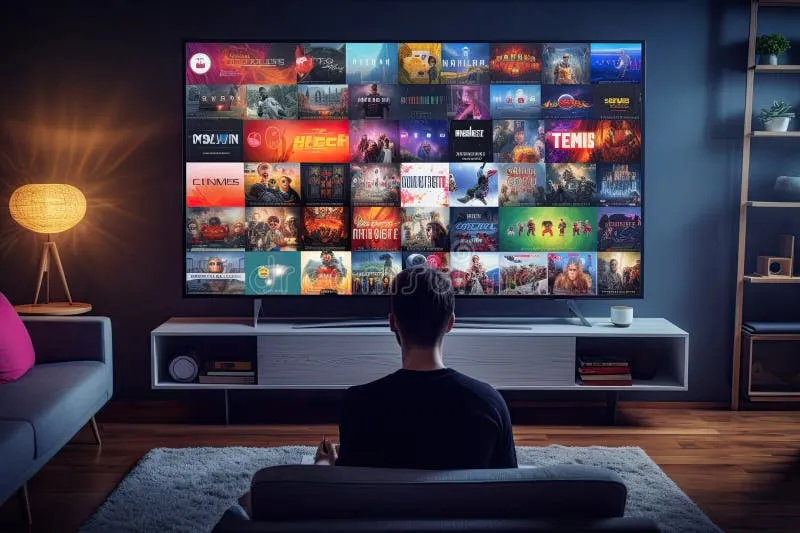
The Comfort Show Economy: Why My 'New Series' List Is Just The Office Again

Photo: Shixart1985, CC BY 2.0, via Wikimedia Commons
Let me confess something upfront: I have started The Office approximately six times this year. Not season one, episode one, mind you — I drop in wherever the algorithm deposits me, usually "Dinner Party," and I stay for hours. Meanwhile, my watchlist contains eleven critically acclaimed new series that I have described to friends as "amazing" despite having seen roughly twenty minutes of each.
I don't think I'm alone. I think I'm the norm.
The Numbers Don't Lie, Even If We Do
Streaming platforms have quietly confirmed what we all suspect: rewatches are a massive chunk of viewing time. Nielsen data has shown for years that back-catalog content — old network staples, syndicated comfort food — rivals or beats shiny new originals in total hours watched. The Office and Suits dominated Netflix's internal rankings for years after their release windows, long after anyone could call them "new."
And there's a whole generation for whom Gilmore Girls isn't a 2000s WB show — it's an autumn lifestyle. Friends found an audience born a decade after its finale. Grey's Anatomy keeps a permanent residence in the top ten like it pays rent there.
We keep telling ourselves we're going to start that new prestige drama everyone's tweeting about. We keep pressing play on Jim and Pam's wedding instead.
Comfort Viewing Is Not a Failure of Taste
The easy critique is that rewatch culture reflects a kind of cultural stagnation — an endless loop of the familiar. I'd push back on that, because the psychology is more interesting than laziness.
Re-watching a beloved show is a fundamentally different activity than watching something new. There's no cognitive overhead: no new characters to track, no plot mechanics to learn, no risk that you'll hate it. Researchers who study media and mood have found that familiar content can genuinely reduce stress and restore a sense of control — it's basically emotional comfort food, minus the takeout container.
Think about when people rewatch. After a brutal workday. During illness. Around the holidays. In the weeks after a breakup. The comfort show is a known quantity in a world that keeps producing unknown quantities at an alarming rate.
There's also a social dimension. Rewatching The Office isn't just watching a show — it's returning to a shared cultural language. Quoting Michael Scott is a handshake. Knowing what happens to Walter Jr.'s breakfast in Breaking Bad is membership. New shows ask you to build that vocabulary from scratch. Old shows already speak it.
The Algorithm Learned Our Habits — and Reinforced Them
Here's the part that makes me slightly uneasy, though. Recommendation engines are trained on what you watch, and what you rewatch. Every comfort-viewing session teaches the algorithm that serving you Parks and Rec again is a safe, high-confidence bet. New show recommendations get deprioritized because they're riskier suggestions — you might click, bounce after ten minutes, and generate a negative signal.
So the loop tightens: you rewatch, the algorithm feeds you more of what you've seen, you rewatch again. The paradox is that streaming gave us infinite choice and then built a machine that gently steers us away from using it.
What This Means for the People Making Shows
Studios have noticed the rewatch economy, and it's changing strategy. That's part of why we're seeing so many revivals, reboots, and legacy sequels — Frasier came back, Dexter got not one but two follow-ups, and Gilmore Girls already did its four-episode victory lap. Producers know a built-in audience that already loves the characters is a safer bet than a cold open on a new IP.
Is that good for TV? Honestly, it's mixed. Some revivals are genuinely great. Many are nostalgia cash grabs. But the underlying demand is real, and pretending audiences should simply "get over it" and watch new things ignores why the comfort loop exists in the first place.
My take: the problem isn't that we rewatch. It's that the ratio has tipped too far. A streaming diet of 90% comfort and 10% new is fine. The reverse — buying into every new premiere, watching two episodes, then retreating to Scranton — is the actual streaming experience for a lot of us, and it leaves both the new shows and the comfort shows feeling a little unloved.
So here's my modest proposal: keep the comfort show. It's earned its spot. But once a month, finish something new. Not for the algorithm. Not for the group chat. Just so the watchlist stops being a monument to good intentions.
Now if you'll excuse me, "Stress Relief" just started autoplaying, and honestly? I'm not made of stone.