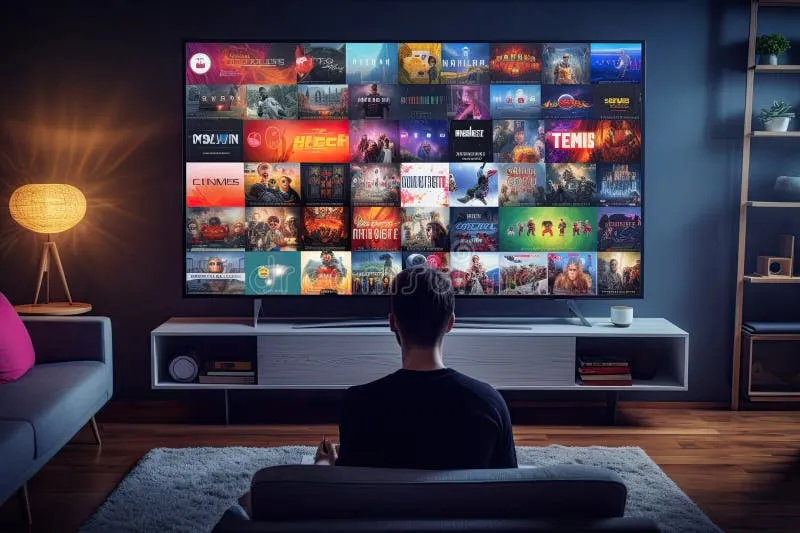
Midnight Autoplay: The Sneaky Design Tricks Keeping You Glued to the Couch

Photo: SFC Peter P. Ruplenas, Public domain, via Wikimedia Commons
It starts innocently enough. You finish an episode of your show around 10:30, you've got work tomorrow, and you tell yourself — out loud, like a person with self-control — "okay, one more, then bed."
Fast-forward to 1:47 a.m. The credits rolled into the next episode so seamlessly that you genuinely don't remember deciding to watch it. Sound familiar?
Here's the uncomfortable truth: that wasn't entirely your choice. It was a design decision, made by someone whose job is keeping you watching.
The Countdown Clock Is Doing the Thinking For You
The most famous trick in the streaming playbook is the autoplay countdown — that five-second timer that appears in the corner of the screen as credits roll. It's short enough that you'd have to actively get up and find the remote to stop it. And that's the point.
The countdown creates what psychologists call a commitment window: a tiny, low-effort decision point that's engineered to be easier to ignore than to act on. Sitting there doing nothing requires zero clicks. Getting off the couch requires several. Guess which one wins at 11 p.m.?
Netflix famously added a feature letting you turn off autoplay for TV shows after users complained. But notice — it's buried in settings, not offered upfront. Friction cuts both ways, and platforms know which direction they want it flowing.
Cliffhangers Are Placed, Not Accidental
Here's something that surprises people: where an episode ends is often a deliberate choice. Showrunners and platform executives have long understood that the strongest retention tool isn't a great episode — it's an unresolved one.
That's why so many episodes cut to black mid-reveal, right as a character opens the door or picks up the phone. The psychological itch of an unresolved question (the "Zeigarnik effect," if you want the technical term) is one of the most powerful motivators in human cognition. Your brain genuinely dislikes unfinished business.
Streaming platforms layer this with a second trick: the next episode thumbnail. That little preview box showing the next installment isn't decoration. Research on interface design suggests that showing users a compelling image of what comes next measurably increases the odds they'll click — or in this case, fail not to click.
The Algorithm Is Your Enabler
Beyond the interface, there's a quieter force at work: personalization. The "Because You Watched..." rows, the notifications that drop exactly when a new season lands, the fact that your homepage is a mirror of your past behavior — all of it funnels you back toward the path of least resistance.
Digital psychology researchers have noted that these systems are optimized for engagement metrics, not viewer satisfaction. The algorithm doesn't know (or care) whether you feel great at 2 a.m. It knows you clicked last time at 2 a.m., so it'll serve up conditions for a repeat.
And let's be honest about the environment we're watching in: a lot of us stream on autopilot while scrolling our phones. The show becomes ambient. And ambient TV is infinite TV — there's no natural stopping point when you're not really tracking the plot anyway.
Taking Back the Remote (Metaphorically and Literally)
You don't have to delete your accounts and move to a cabin. But if the "one more episode" tax is eating your sleep, a few practical moves help:
- Kill the autoplay. Both Netflix and Disney+ let you disable autoplay for episodes. Do it. Reintroducing a five-second pause between episodes gives your brain a real decision point.
- Turn off "watch next" previews. Netflix has a separate toggle for autoplay previews while browsing. Silence it.
- Set a hard episode budget before you press play. Decide "two episodes" before the show starts, not during the credits, when your resolve is at its weakest.
- Use the sleep you already have. If you're watching on a TV, the built-in sleep timer (or a streaming device setting) can physically cut you off. Let the machine be the bad guy.
- Watch in a different posture. Genuinely. Watching from bed makes stopping feel like a physical chore; watching upright makes it easier to get up and go.
None of this is about willpower shaming. These platforms employ some of the best behavioral designers on the planet, and they're aiming those tools at you every single night. A little counter-design in your own living room isn't weakness — it's just leveling the playing field.
The next time the countdown timer starts ticking, remember: those five seconds belong to the platform. Taking them back belongs to you.