Two Minutes of Ruin: The Studio Machine That Can't Stop Spoiling Its Own Movies
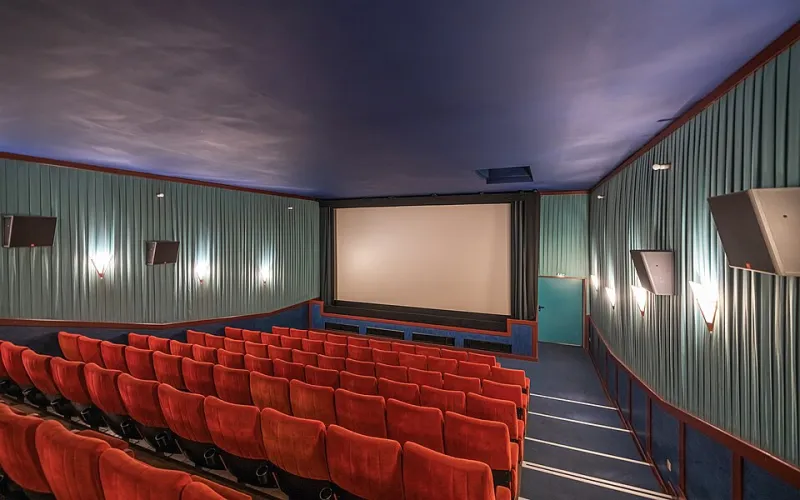
Photo: A.Savin, FAL, via Wikimedia Commons
There's a specific kind of heartbreak that happens in a darkened theater about eleven seconds into a trailer. You settle in, the screen glows, the familiar bmmmm of a bass drop hits — and then the trailer casually walks you through the entire plot of a movie you were genuinely excited about. Setup, inciting incident, midpoint twist, emotional climax, and a final shot that might as well be the last frame before credits. All before your popcorn gets cold.
We did this to ourselves, sort of. But mostly, the studios did it to us.
The Fear Economy of Opening Weekends
Here's the uncomfortable truth: nobody at a major studio wants to spoil the movie. They spoil it because the alternative — ambiguity — feels like financial Russian roulette. A tentpole film can cost north of $200 million before a single marketing dollar gets spent, and marketing budgets routinely match production costs. When that much money is on the table, the calculus gets cowardly fast.
The thinking goes something like this: if we reveal everything, and audiences still show up, we win. If we reveal nothing and the movie flops, somebody's getting fired. So the safe play is the spoiled play. The trailer becomes less of a tease and more of an insurance policy — a legally distinct plot summary with a needle drop.
And it's not just the two-and-a-half-minute theatrical cut. We now get teaser trailers, official trailers, final trailers, TV spots, and — my personal nemesis — the "exclusive look" clip that runs during a playoff game and gives away the movie's best set piece to roughly 20 million people simultaneously.
Who Actually Makes This Call?
It's rarely the director. Christopher Nolan famously keeps his trailers in-house and vague for a reason. More often, the spoil-heavy cut wins an internal cage match between the filmmaker's team and the studio's marketing department, and marketing usually has the bigger office.
The process typically looks like this: the filmmaker submits a trailer, marketing tests multiple cuts with focus groups, and the version that scores highest is almost always the one that answers the most questions. Clarity polls well. Mystery makes people nervous in a conference room in Burbank. So the cut where the hero explains their motivation in a rain-soaked voiceover beats the cut that ends on an unresolved image — every single time.
There's also the data problem. Trailers are now engineered like software. Studios A/B test thumbnails, track drop-off points, and optimize for the moment that generates the biggest measurable reaction. And the moment that generates the biggest measurable reaction is, statistically, the movie's best scene. So the best scene goes in the trailer. Then a second-best scene. Then, because you've already spent the good stuff, the twist.
The A24 Counter-Program
Which brings us to the studios playing a completely different game. A24 built a brand partly on restraint — trailers that are more mood board than plot summary. The teaser for Hereditary is just sixty seconds of a house and a coffin, and it's more unsettling than most full trailers with three twists in them. That's not an accident; it's a strategy. When you can't outspend Disney, you can out-taste them.
Other outfits have caught on. Some directors now debut trailers at fan conventions before they hit YouTube. A handful of filmmakers have experimented with releasing films trailer-free or with teaser cuts so abstract they border on art installation. The problem is scale: restraint works when your movie opens in 800 theaters and lives off word of mouth for six weeks. It's a much scarier bet when your movie opens on 4,000 screens on a Friday and has one weekend to justify its existence.
Is Trailer-Free Even Sustainable?
The dream of the spoiler-free rollout is lovely, but marketing exists because discoverability is brutal. There are more shows and movies premiering every week than any human can track. The trailer, for all its sins, is still the most efficient delivery mechanism for "this exists, and here's why you care."
So the realistic future probably isn't no trailers. It's trailers that respect the audience — shorter cuts, less plot, more vibe. A few studios are quietly testing this, letting directors cut their own promos and releasing them with minimal fanfare. When those land, they outperform expectations. When the focus-grouped summary cut lands instead, we all get to watch the whole movie in the parking lot before we buy a ticket.
The trailer was invented to make you curious. Somewhere in the optimization pipeline, someone decided curiosity was too risky. Getting that back might be the single easiest way to make going to the movies feel special again — two minutes at a time.